
Have a question, a story to share, or documents from this history? Reach out to us at thelarchproject@gmail.com
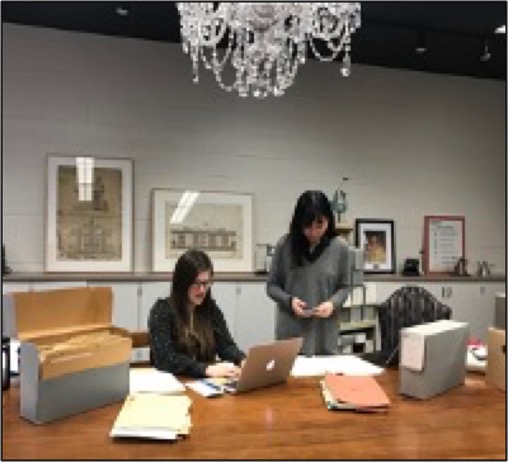
Like many of the best things, this project started by coincidence. Jeanne Sinclair, now a professor at Memorial University in Newfoundland, was a doctoral student at OISE and interested in what kind of bilingual-education options there were in Ontario schools. She had heard about the International Languages (IL) program in her kids’ schools and wanted to learn more. So, in 2015 she went to the Archives of Ontario, dug around a bit, and found some amazing documents about the origins of the IL program.
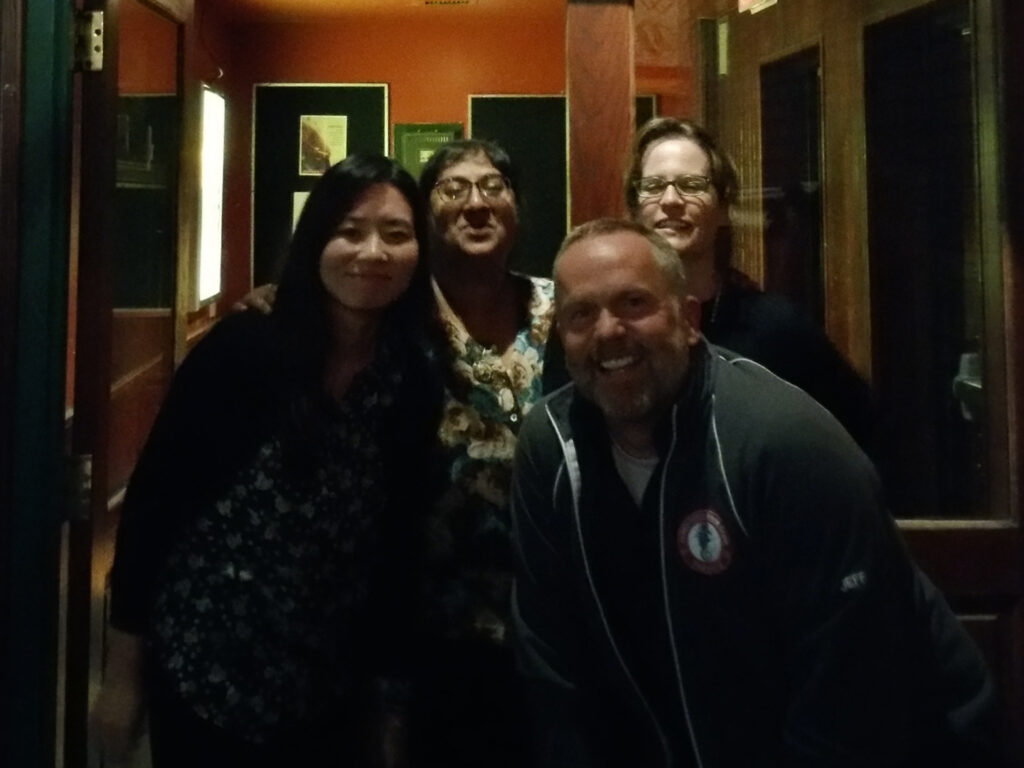
Jeanne reached out to Eve Haque at York, knowing that Eve is an expert on Canadian language policy. Eve responded to Jeanne that Jeff Bale was now a professor in her program and an expert on language policy, so she should also contact him. By this time, Mayo Kawaguchi had started in our doctoral program and was also interested in heritage language education. The four of us met to discuss what Jeanne had found and decided to return to the Archives of Ontario to see more.
Our first trip, which also included Krystyna Arnold, an MA student working with Eve at York at the time, led us to over a dozen boxes with relevant files. We thumbed our ways through them, instantly recognizing there were incredible stories to be told. We didn’t have any specific research questions, we didn’t have a theoretical framework in mind, we didn’t know what we were looking for, but we knew we had found something as important as it was compelling.
Some 10 years later, we were (finally!) ready to share our learning on a website like this.
Looking back, we can organize our work into three phases. But it would be misleading to say that we planned it this way!
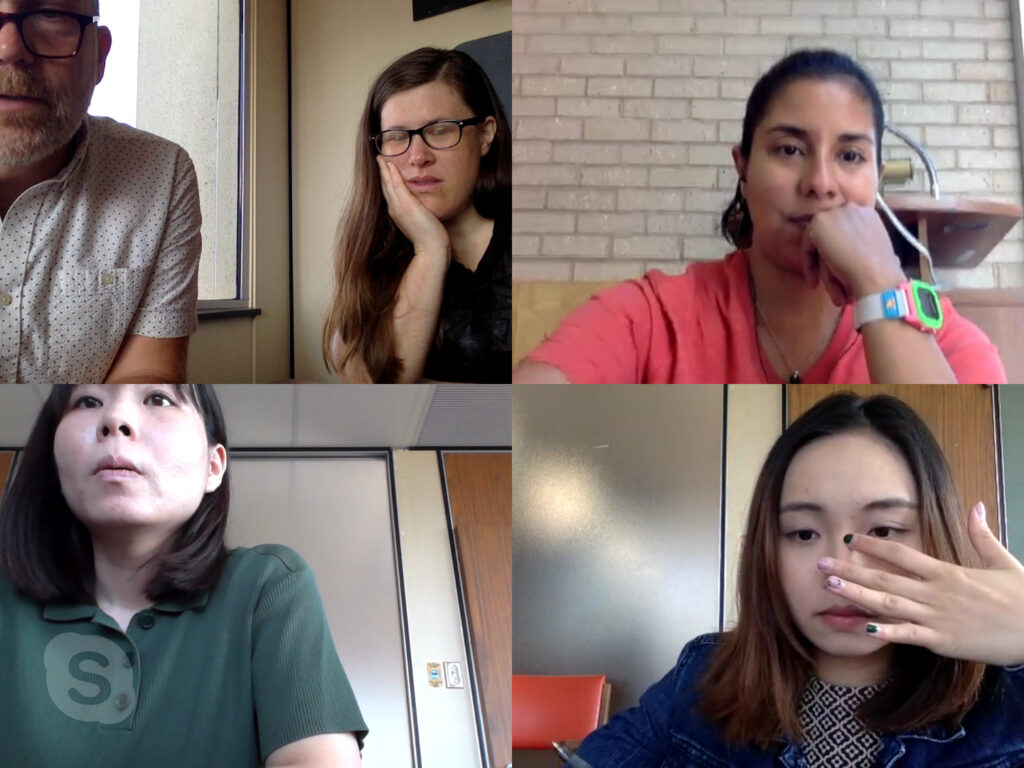
Jeff Bale is Professor of Language and Literacies Education at OISE, University of Toronto. His research applies political-economic, anti-racist, and critical perspectives to educational language policy and teacher education. He is lead author of Centering Multilingual Learners and Challenging Raciolinguistic Ideologies in Teacher Education: Principles, Policies and Practices (Multilingual Matters, 2023) and co-editor with Sarah Knopp of Education and Capitalism: Struggles for Learning and Liberation (Haymarket, 2012). He was a Humboldt Fellow in 2021-2022 at the Universität Bremen in Germany. Currently, he is Principal Investigator of the SSHRC-funded study on Language, Race, and Regulating Difference: The Heritage Languages Program in Ontario, 1977-1987 that has led to this website. His academic work is rooted in the decade he spent teaching English as a Second Language in urban secondary schools in the United States.
Professor Eve Haque is the York Research Chair in Linguistic Diversity and Community Vitality at York University (Canada). She is also co-editor for the TOPIA: A Canadian Journal of Cultural Studies. Her research and teaching interests include multiculturalism, white settler colonialism and language policy, with a focus on the regulation and representation of racialized im/migrants in white settler societies. Her current research project is centred on academic freedom, free expression and the harms of language. She has published widely on these topics and is also the author of Multiculturalism within a Bilingual Framework: Language, Race and Belonging in Canada (University of Toronto Press, 2012).
Mayo Kawaguchi has worked for the LARCH project in the role of lead graduate researcher, and currently she is working as a postdoc fellow at OISE, University of Toronto. Her doctoral dissertation, Beyond the Frame of Heritage Languages: Recovering Policy Genealogies from Historical Challenges in the Toronto Board of Education, reflects her interdisciplinary academic journey in history, Pacific and Asian studies, and language policy in education.
Mingyi Li is a PhD candidate in Language and Literacies Education at the University of Toronto. She has worked on the Language and Race in Contemporary Canadian History (LARCH) project for the past four years as a graduate researcher, and her dissertation focuses on Chinese Canadian experiences within this broader history.
Jeanne Sinclair (PhD, OISE, University of Toronto)
Krystyna Arnold (MA, York University)
Gina Park (PhD, OISE, University of Toronto)
Takako Nomura (PhD, OISE, University of Toronto)
Jennifer Burton (PhD, OISE, University of Toronto)
Jeanne Sinclair (PhD, OISE, University of Toronto)
Takako Nomura (PhD, OISE, University of Toronto)
Jennifer Burton (PhD, OISE, University of Toronto)
Hyunah Kim (PhD, OISE, University of Toronto)
Ammar Aquil (MT, OISE, University of Toronto)
Tasneem Ahmed (MA, OISE, University of Toronto)
Anne Popovich (PhD, OISE, University of Toronto)
Michelle Yanes (PhD, OISE, University of Toronto)
Yingjia Zhang (PhD, OISE, University of Toronto)
Christopher Gradin (PhD, OISE, University of Toronto)
Mizusa Morii (PhD, OISE, University of Toronto)
Sudhashree Girmohanta (PhD, OISE, University of Toronto)
Xiaoyue Chen (MA, OISE, University of Toronto)
Mandy Lau (PhD, York University)
Lisa Lackner (PhD, OISE, University of Toronto)
HaEun Kim (MA, York University)
Kathleen Anne Zaragosa (MA, OISE, University of Toronto)
Anna Gomes (MA, York University)
Mizusa Morii (PhD, OISE, University of Toronto)
Tatiana Fimognari (PhD, OISE, University of Toronto)
Alana Duncan (PhD, OISE, University of Toronto)
This project would not have been possible without a great deal of support from a wide range of individuals and institutions.
The fact that we are able to list so many student names in the section above is in part a result of the funding policies OISE had in place at the time our work began (sadly, they have since changed). Most thesis-track students receive(d) a funding package that includes what OISE calls a Graduate Assistantship, through which students are hired to support faculty research projects. This is how Jeff was able to include so many students on this project in the years before we were awarded a SSHRC grant. The project got the support it needed, and a long list of students gained important experience in historical research methods informed by critical theory.
With respect to that grant, OISE is lucky to have a dedicated team of staff to support faculty members in securing particular forms of external funding. At the time we applied for a SSHRC grant, this team included Madeleine Taylor, Lara Cartmale, and Linn Clark in the Dean’s office, with Alexandra Makos supporting faculty in Jeff’s department. We are very grateful for their guidance.
Still within UofT, we were fortunate to be included in a Digital Storytelling Workshop in fall 2024 led by Julia Gruson–Wood and Alisha Stranges of the Critical Digital Humanities Initiative. Through this workshop, we created a first draft of the “Is Another School Possible” digital story. Alisha Stranges kindly offered additional support to turn our first draft into the version published on this website. Thank you Alisha!
CDHI staff also kindly connected us with Meg Sanchez for assistance in imagining, designing, and then creating this website. We are extremely grateful for Meg’s support – and patience! – in putting this site together.
Special thanks go as well to Leslie Barnes, one of the many outstanding librarians at the University of Toronto, who oversees the UofT Libraries’ Exhibitions webpage. Our team deliberated for some time about which platform to use for our website. Leslie was extremely generous in offering her guidance throughout.
Most of the data informing this website is archival. We have benefitted from the support of archive staff at a number of locations, including the Archives of Ontario and the Multicultural Historical Society of Ontario. Special thanks go to Marie Passerino, administrative staff at the TDSB Archives, and Greg MacKinnon, archivist, for their help.
Finally, we wish to thank the many people who agreed to participate in creating oral histories for the project.
The LARCH Project is committed to making research accessible and useful beyond the university. We encourage you to share and build on the materials on this site.
Unless otherwise noted, content on this site is licensed under a Creative Commons Attribution-NonCommercial-ShareAlike 4.0 International License (CC BY-NC-SA 4.0).
This means you are free to:
Under the following conditions:
Important note on archival and third-party materials
Some materials on this site — including archival documents, images, and interview recordings — may have different rights and permissions. Please refer to item-level information or contact us if you are unsure.
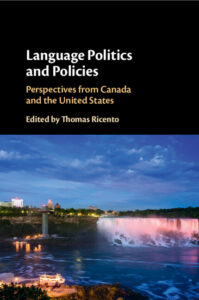
This first project publication introduced two early analyses: on the dozens of Angry Letters Ontario citizens wrote to the Ministry of Education and a boycott led by the Toronto Teachers Federation. Both the letters and the boycott protested different aspects of the Heritage Languages Program. This paper considers these various critiques.
Bale, J. (2019). Racialized resistance to the Heritage Languages Program in Ontario. In T. Ricento (Ed.), Language politics and policies: Perspectives from the United States and Canada (pp. 215–233). Cambridge: Cambridge University Press. https://doi.org/10.1017/9781108684804
This paper offers early analysis of advocacy for heritage-language and Black cultural-heritage programs and where these two kinds of advocacy overlapped – or didn’t. This paper asks: when was anti-racism a salient topic for heritage-language advocates? When were the linguistic dimensions of racism salient to advocates for Black cultural-heritage programs?
Bale, J., & Kawaguchi, M. (2020). Heritage-language education policies, anti-racist activism and discontinuity in 1970s and 1980s Toronto. Critical Inquiry in Language Studies, 17, 5–25. https://doi.org/10.1080/15427587.2020.1713787
This paper focuses on Bill 80, the last significant legislative reform to the Heritage Languages Program, proposed in 1986. The paper analyzes the text of Bill 80 itself, another round of Angry Letters from Ontario citizens opposed to it, and internal Ministry documents about the bill. The paper argues that discourses about language (e.g., “official bilingualism”) allowed opponents to express their racialized objections to Bill 80 in more tolerable ways.
Kim, H., Burton, J., Ahmed, T., & Bale, J. (2020). Linguistic hierarchisation in education policy development: Ontario’s Heritage Languages Program. Journal of Multilingual and Multicultural Development, 41, 320–332. https://doi.org/10.1080/01434632.2019.1618318
This paper dives into greater detail about the Toronto Teachers Federation and its shifting positions on the Heritage Languages Program (HLP). The paper trades a radical shift from early support from the union for more fulsome bilingual-education programs to its resistance to efforts by the Toronto Board of Education (TBE) to implement the HLP. The paper focuses on a boycott the union led in 1984, in particular the union’s claim that it was not against heritage-language education in general, just some aspects of the TBE was implementing it. The paper analyzes union-created reports about the HLP to argue that the union was, in fact, challenging the logic of the heritage-language education overall.
Bale, J. (2023). Language, race, and legitimacy: The Toronto Teachers’ Federation’s battle against heritage-language programs in Toronto schools, 1982–1986. In R. Tierney, F. Rizvi, K. Erickan, & G. Smith (Eds.). International Encyclopedia of Education, Vol. 2 (4th ed.) (pp. 385–397). Elsevier. https://doi.org/10.1016/B978-0-12-818630-5.08061-1
This paper, co-authored with leading historian of Black education in Canada, Prof. Funké Aladejebi, delves deeper into the complicated interplay between heritage-language and Black-cultural heritage advocacy. Drawing on the notion of thick solidarity (Liu & Shange, 2018), the paper argues that dominant ideas about official bilingualism and multiculturalism, as well as specific advocacy on behalf of heritage-language education in Toronto, failed to account for the specific experiences Black Canadians have with language and culture. This oversight animated two trajectories in advocacy. Sometimes, these trajectories overlapped and led to temporary forms of solidarity; too often, heritage-language advocates were not able to really hear the ideas and demands Black parents were making for greater racial and linguistic justice in Toronto schools.
Aladejebi, F., & Bale, J. (2025). Race, Language, and Contested Solidarities: The Heritage-Language and Black Cultural-Heritage Programs in Ontario in the 1970s and ’80s. History of Education Quarterly, 65(2), 169–195. https://doi.org/10.1017/heq.2025.4
Kawaguchi, M. (2024). Beyond the Frame of Heritage Languages: Recovering Policy Genealogies From the Historical Challenges in the Toronto Board of Education. (Doctoral dissertation, University of Toronto). https://hdl.handle.net/1807/140699
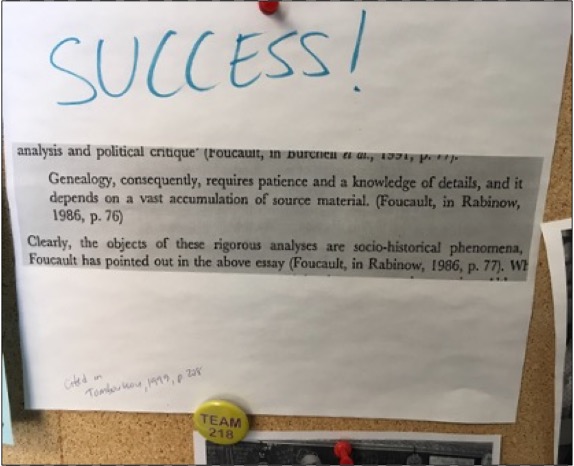
Based on a critique of binary thinking behind the term heritage language, this dissertation uncovers historical struggles around regulating heritage language education in the Toronto Board of Education from the mid-1970s to the early 1980s. Adopting governmentality (Foucault, 1991) as a theoretical framework and genealogy as a method (Walters, 2012), this study examined how heritage languages invoked more than linguistic questions in the context of school education.
Have questions about or feedback on any aspect of the stories shared here? Were you part of these histories and have documents, artefacts, or other information you want to share?
If so, please contact us at thelarchproject@gmail.com